ÌìÑĺ£½ÇÉçÇø Intelligence
To keep up to date on ÌìÑĺ£½ÇÉçÇø webinars, events and industry and product news, 
sign up today
Subscribe NowRegulatory updates spiked fivefold around MiCA and DORA implementation. Here's what PSPs need to know to prepare for PSD3/PSR before the next wave hits.
DORA compliance is now live. Find out how ÌìÑĺ£½ÇÉçÇø can help you optimise your compliance processes:ÌýDORA Compliance Software: What to Look For and Why It Matters
The near-simultaneous entries into force of the Markets in Crypto-Assets Regulation (MiCA) on December 30, 2024 and the Digital Operational Resilience Act (DORA) on January 17, 2025 created significant compliance pressures across the industry, with regulatory activity spiking across Europe. This regulatory convergence offers critical insights for payment service providers (PSPs) and financial institutions preparing for the next wave of major EU relevant legislation; in particular, the Payment Services Directive 3 (PSD3) and Payment Services Regulation (PSR), which are currently advancing through trilogue negotiations.
As ÌìÑĺ£½ÇÉçÇø’s Horizon Scanning data reveals, regulatory activity intensified dramatically in the lead up to the entry into force of MiCA and DORA, coupled with sustained high activity levels post-implementation, which demonstrates that EU financial regulation operates in waves of concentrated impact rather than steady streams.
For companies already managing ongoing deadlines across the globe, understanding these patterns is crucial for resource allocation, system preparation and strategic planning for major EU legislation coming down the line, in particular PSD3/PSR, which are on the horizon.Ìý
Regulatory updates related to MiCA and DORA from Aug 2024 to Aug 2025
�
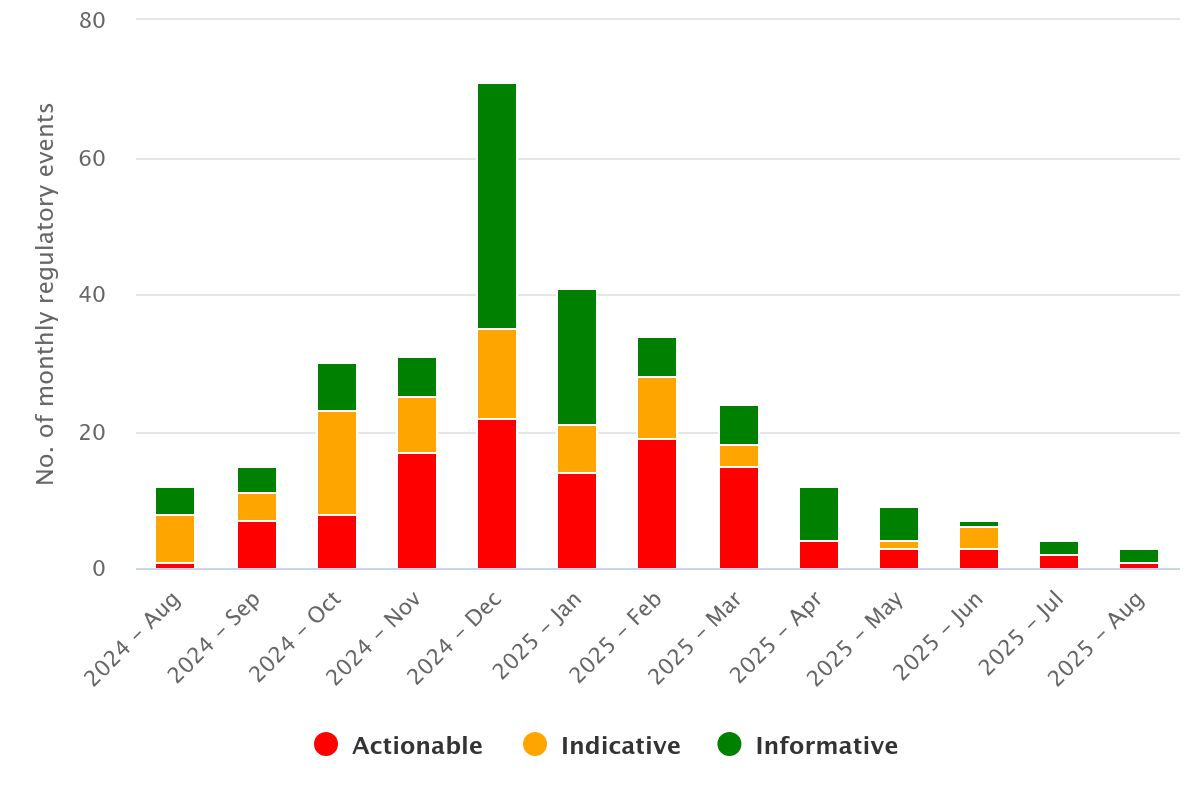
Over the preceding 12 months, the number of regulatory updates published on ÌìÑĺ£½ÇÉçÇø PC Horizon Scanning regarding MiCA and DORA peaked in December 2024, as MiCA came into effect on December 30, 2024, with DORA following shortly after on January 17, 2025.
In the four months leading up to the implementation dates, the total number of updates rose from 12 to 71, a nearly fivefold increase, with actionable updates increasing from 1 to 22, which are updates that indicate a regulatory change is taking place and action needs to be taken. Even after the implementation dates passed, regulatory updates remained high for the three months following as member states scrambled to make the necessary changes to comply. Although this wave died back as the significant deadlines passed, it is indicative of the kind of spike that can be expected around the entry into force of new EU legislation, especially when more than one is coming at the same time.
�
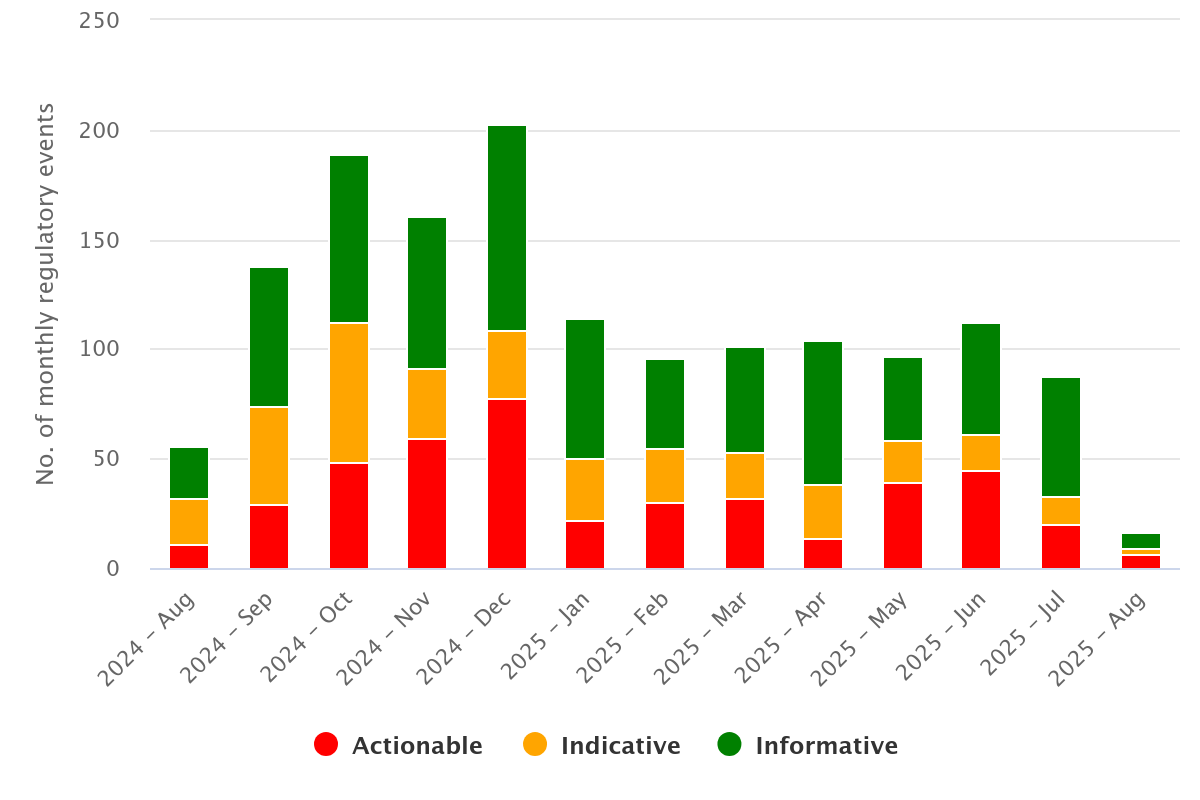
Then it must be remembered that regulatory developments at both the EU and jurisdictional levels continued in parallel. Preparation for MiCA and DORA had to be managed alongside other regulatory demands, adding extra pressure on regulatory and compliance teams. Although the implementation of MiCA and DORA clearly drove a surge in updates in the lead-up to their effective dates, the broader European regulatory landscape remained consistently demanding. Each month more than 100 updates were released in Q3 2024, and at least half of these each month were actionable or indicative (which means consideration needed to be taken as action could be coming). DORA and MiCA updates made up just under half of the actionable updates in December, meaning there was still a lot of activity occurring across the region at the time of year where typically demand tapers off, as seen in the previous two years.
The data highlights how regulatory impact and the amount of relevant regulatory updates being released increase leading up to and following the implementation of major EU legislation for a sustained period of time, particularly when there are more than one concurrently.
This would suggest that around the as-yet-to-be-defined implementation of the next big piece of EU legislation in the payments industry, PSD3/PSR, that the industry could expect to see up to as much as a fivefold increase in regulatory activity for a significant amount of time. MiCA and DORA were direct regulations rather than directives, which means there wasn’t the added complexity of transposition at member states, and activity could be even higher with draft laws, consultations and additional guidance or interpretation expected.Ìý
PSPs should, therefore, do what they can to be prepared:
Negotiations on PSD3/PSR are currently underway under the Danish presidency of the Council, with the expectation that the trilogues will be completed by the end of the presidency in December 2025 and a final version of the legislative package agreed upon.
�
â€�Book a demo so a member of the team can show you how ÌìÑĺ£½ÇÉçÇø's Horizon Scanning can help your business stay ahead of pressing topics like this, and more.